Sunday, September 27, 2020

Exploring the World of Wild Animals


Wild animals are a topic that fascinates many children and adults. The following activity is designed to help families, teachers, and children explore the world of wild animals together while simultaneously building children's physical, cognitive, and language skills.
.
Age Group: This activity is very moldable and can easily be used with children ranging from 2-5 years

Type of Activity:  This activity is designed to be done either one on one at home or in a small group in a classroom because it requires close adult supervision.

Learning Goals:

1.  Children will practice their cutting skills by cutting out pieces of paper and cardboard and/or building the muscles needed for cutting by tearing and gluing paper. 

2. Through listening to Polar Bear, Polar Bear children will explore places where you might see wild animals, such as the zoo, and work on building their animal vocabulary. 

Areas of Development Addressed

Language Development: Reading to children and engaging them in discussions helps build their language skills, vocabulary, and pre-reading skills.

Physical Development: Cutting out pieces of paper builds children's scissor skills. Also, tearing and gluing paper helps build fine motor skills such as the pincer grasp, which are precursors skills needed for cutting.

Cognitive Development: As children explore the topic of wild animals, they gain a better understanding of the world around them. They also practice the mental skill of categorization as they learn what types of animals can be classified as wild. 

Materials: 

  • Colored paper. You can use construction paper, tissue paper, crepe paper, or even torn up magazines and newspapers.
  • Glue
  • Recycled cardboard. For example, empty toilet paper rolls, empty cereal boxes, or unused paper plates. 
  • Child scissors
  • (Optional) tape and popsicle sticks.

Activity Description:

This activity is divided into two parts. The first half of the activity involves watching a short video with children. In the video, I talk with a puppet giraffe about what wild animals are and some places you might see them, such as at a zoo or a circus. I also speak briefly about why we usually don't see wild animals at circuses anymore. I then move on to reading a book about wild animals called Polar Bear, Polar Bear by Bill Martin Jr., and Eric Carle. If you don't have a way to play the video for children, for example, you are in a classroom that doesn't use electronics, you can still do the activity. Instead of watching the video, you can read the book aloud to children and have a short discussion about places where you can see wild animals. If you don't have a copy of Polar Bear, Polar Bear, you can find it at most public libraries, or you can use a different book that shows pictures of wild animals. 


The second half of the activity involves giving children the opportunity to create an animal face mask. To prep for this activity, you will need to cut a basic mask shape out of cardboard.  You can use whatever cardboard you have lying around. I made a trial mask to get an idea of what works and what doesn't. I started by tracing a circle using a small mixing bowl on an old cereal box.
                                            

Then I cut out the circle, cut it in half, and cut eye holes into each half. This created two masks. You could also use a paper plate cut in half to save time.


 Once you have your masks cut out, gather together your paper, scraps of cardboard, scissors, and glue. After children have heard the story, explain to them that they can create animal masks like the ones the children in Polar Bear, Polar Bear had. Provide each child with a mask, glue, scissors, if they are ready for them, and an assortment of paper and cardboard. Also, try and set out some books with pictures of real animals to give children inspiration. If you are at home and don't have picture books available, you can print some photos out or even pull up some pictures on a phone or computer to show children. Explain to children that they can decorate the masks with the paper and cardboard to create any animal they want. Encourage them to try cutting or tearing the paper and gluing it on to their mask. For younger children, you may need to demonstrate this or offer some physical assistance. Also, this project may be too open-ended for some children. If this is the case, try to provide some gentle guidance that still allows children to make choices. For example, ask them what animal they would like to make or ask them what colors they would like to use. As children work, build their language skills and vocabulary by asking them to tell you about their animal. Comment on the colors they are using or talk about the animal they are making. For example, if they are making a lion talk about where lions live, what they eat, etc.

 As children create, it may not look like a discernable animal to you, but that's okay. Research has shown that one of the best ways to build children's creativity is through projects that are open-ended and focus on experimenting with various art mediums rather than creating a picture-perfect product (Fox & Schirrmacher, 2011). 


Once children are done creating their masks, you can help them attach a handle. For my mask, I found it worked best to tape a popsicle stick to the back. However, if you don't have these materials, you could also cut a strip of cardboard and have children glue it to the mask to create a handle. 


Ways to Expand or Adapt the Activity:
  • After children create their masks, they could be used in the dramatic play area to play pretend zoo or animal parade.
  • If children aren't interested in cutting and gluing paper, try having them paint the masks or draw on them.
  • If you have children with advanced scissor skills, try having them cut their own mask out of paper or thin cardboard. 

References

Fox, J. E., & Schirrmacher, R. (2011). Art and Creative Development for Young Children (7th ed.). Cengage Learning.

Sunday, May 17, 2020

Move Like an Animal Game


Exercise is an important part of maintaining health in children just as it is for adults. Regular physical activity in childhood has been found to help build stronger bones and muscles, contribute to better sleep, and even improve mental health (Gavin, 2018; The National Association of School Psychologists, 2017). For the majority of children, the best way to exercise is through regular physical play (Gavin, 2018). Recently, the COVID-19 pandemic has created some barriers to physical play. In accordance with social distancing laws, many parks, playgrounds, and YMCAs have been closed. This means that many children no longer have places to run around and engage in physical play. The good news is that there are exercise activities that children can do at home. The following game is designed to get children up and moving at home while having fun.

The Move Like an Animal Game

Goal: Children will engage in a number of exercise movements including, running, jumping, and crawling by pretending to be different animals.

Age: This activity was created with children 2- 4 years in mind. However, some older children may also like to join in.

Players: You can have as many or as few players as you want. You can play one on one with your child, or you can include other family members.

Materials:

  • Animal cards (printable template below)
              or
  • Paper and drawing utensils. 
Prepping for the Game:

To play the game, you will need a small pile of cards that each give a different animal movement direction. For example, one card might read hop like a bunny or walk like a crab. I have included a link to a pdf of animal cards that you can print and cut out.

Printable Cards Link

If you don’t have access to a printer, the cards are simple to make. All you will need are several small pieces of paper and any type of drawing utensil. On each piece of paper, write a different animal movement direction. If you want, you and your child can also draw animals on each piece of paper. You could also cut pictures of animals from magazines and glue them on the cards. This can be a fun opportunity for you and your child to make cards that are personalized with their artwork and include their favorite animals.


Game Directions:

To play the game, start by placing the cards in a stack. Next, have a player draw a card. Read the card together, and then everyone has to pretend to be the animal on the card. Then, proceed to the next player and repeat. Keep taking turns until you run out of cards, or you and/or your child start getting tired. To mix the game up you could try making animal noises while doing the movements or see who can be the fastest bunny, crab, horse, etc.

What children learn 

Besides being a fun way to get kids moving and their hearts pumping, this activity helps children...
  • Practice gross motor skills-  Gross motor refers to the large muscles that help us do activities such as sit, move our arms, jump, bend, and walk. As children jump, crawl, and run they engage their large muscles and gain better control of them (The Early Childhood Advisory Council, 2012).
  • Practice reading skills- As you play the game, read the cards with your child. Try pointing out the words as well as the pictures. Reading with children helps build important reading skills. For example, children learn that English print is read from left to right and that pictures can be used as symbols of words. Also, using written language during a game shows children that writing has many uses that expand beyond books (The Early Childhood Advisory Council, 2012).


References

The Early Childhood Advisory Council. (2012). New York State Early Learning Guidelines. Retrieved from https://www.ccf.ny.gov/files/7813/8177/1285/ELG.pdf

Gavin, M. L. (2018). Kids and Exercise. Retrieved from https://kidshealth.org/en/parents/exercise.html

The National Association of School Psychologists. (2017). Supporting Children’s Mental Health: Tips for Parents and Educators. Retrieved from https://www.nasponline.org/resources-and-publications/resources-and-podcasts /mental-health/prevention-and-wellness-promotion/supporting-children's-mental-health-tips-for-parents-and-educators

Saturday, April 11, 2020

Solving Problems with Music


April 11-16th is a special time of year called the Week of the Young Child. The Week of the Young Child is a celebration that was started by the National Association for the Education of Young Children (NAEYC). It is a time to celebrate children and the amazing families behind them. It is also a time to spread awareness about the importance of quality learning experiences and supporting children and families. Each day of the week has a different learning theme. To coordinate with Musical Monday, the following activity is a fun educational song you can sing with your child. 

Activity Name: The What Do I Do Song

Objective: Children will learn basic problem-solving strategies.

Age Group: I created this activity with children ages 3 to 5 years in mind. However, this activity is very moldable and could be used for children a little younger or older with some adapting. 

Areas of Development Addressed
This activity supports children’s development in several areas...
  • Language Development: Music and singing is an excellent way for children to learn and practice new words and expand their language skills.
  • Social Development: One of the goals of this activity is to show children that they can go to an adult for help with a problem. Recognizing that adults can offer assistance and going to them for help is an integral part of social development.
  • Cognitive Development: This activity focuses on teaching children how to problem-solve, which is an essential cognitive skill.
Learning Standards
The New York State Learning Standards is a document developed by the New York State Education Department (NYSED) that serves as a guide for what children should be learning at different ages. This activity meets two of the preschool learning standards. These standards are...
  • Standard: PK.AL.2 Actively engages in problem-solving: The idea of this standard is that children should be learning different methods for problem-solving such as trying different solutions and going to adults for assistance (NYSED, 2019). The song activity addresses this learning standard because the objective is to teach children what they can do and who they can go to when they encounter a problem.
  • Standard: PK.ARTS.9. [MU: Pr4-6.PK] Performs Music The idea of this standard is that children should participate in basic music performance through singing, playing with instruments, and moving to music (NYSED, 2019). The song activity addresses this standard because it requires children to sing along and follow a rhythm.

The Importance of Problem Solving Skills

As COVID-19 continues to run its course, the whole world is dealing with a lot of uncertainty and stress. This stress can take a toll on children’s and families’ mental health. One way you can work to protect you and your child’s mental and emotional well being is through building resilience. Rachel Wagner (2016), from the Devereux Center for Resilient Children, explains that resilience is the ability to bounce back from adversity. Resilience helps us get through difficult times as well as cope with everyday changes and stresses. One of the ways you can help build your child’s resilience is through helping them develop problem-solving skills. According to the National Association of School Psychologists (2017), building problem-solving skills helps children develop a sense of competency. They learn that they are capable of doing hard things and overcoming challenges, which is critical to maintaining a healthy mental state. Teaching problem-solving skills can also benefit families’ mental health by alleviating some stress. Often children become frustrated when they are met with a problem. This frustration can lead to challenging behaviors such as tantrums. Teaching positive ways to deal with problems can help reduce behaviors related to frustration and alleviate the stress of having to constantly guide children through frustration.

Activity Description
The What Do I Do Song is a song you can sing with your child that talks about different things they can try when they run into a problem. It is set to the tune of “She’ll Be Coming Round the Mountain.” In my version of the song, I talk about taking deep breaths to calm down, talking about our feelings, going to a teacher for help, asking family for help, thinking about solutions, and trying out different ideas. I have linked a video of me singing that you and your child can follow along to. Try singing this song with your child and talking about ways to solve a problem when they are calm. Later, when they become frustrated over a problem, you can use the song as a prompt. For example, you might say, “It looks like you are feeling frustrated right now. Do you remember our problem-solving song?” You can then sing the song together and try some of the different ideas in the song.


Adapting the Song
My version of the song includes some general problem-solving techniques, and if you want, you can use it as is. However, this song can be tailored to your family and child. For example, in the song, I mention going to Mom and Dad for help. However, I realize that families come in all different makeups, so feel free to adapt this song to fit your family. Also, you can add different problem-solving techniques that work for your child. You could even have a discussion with your child about different things they would like to try when they have a problem and add them to the song. The lyrics don’t need to be perfect. In fact, the sillier they are, the more fun you and your child can have.


References

National Association of School Psychologists. (2017). Supporting children’s mental health: Tips for parents and educators [Handout]. Bethesda, MD: Author. Retrieved from https://www.nasponline.org
/resources-and-publications/resources-and-podcasts/mental-health/prevention-and-wellness-promotion/supporting-childrens-mental-health-tips-for-parents-and-educators

New York State Education Department. (2019). The New York State Prekindergarten Learning Standards: A Resource for School Success. Retrieved from http://www.p12.nysed.gov/earlylearning/d
ocuments/new-york-state-prekindergarten-learning-standards.pdf

Wagner, R. [Hartfordfoundation]. (2016, August 9). Rachel Wagner Talks About Building Resilience in Children [VideoFile]. Retrieved from https://centerforresilientchildren.org/

Saturday, April 4, 2020

Squirmy Worm and the Coronavirus


Nearly everyone in the world right now is having to face new challenges and work through difficult emotions.  As COVID-19 continues to spread across the world, it is causing people to experience feelings of stress, anger, worry, and sadness. These emotions can be hard for anyone to work through, but they can be especially difficult for young children who are still learning how to process their emotions. The following learning activity is designed to help children identify the emotions they are experiencing and find healthy ways to work through them. 

Activity Name: Squirmy Worm Feelings Tool

Learning Objective: Children will learn to identify their feelings and practice healthy coping strategies.

Age group: This activity was designed for children four years and older. However, younger children can also participate with some extra support.

Materials:
  • Paper
  • Any type of drawing utensil
  • (Optional) Playdough
  • (Optional) Bubble solution

Activity Description:

The first half of the activity involves watching a short-story with your child. I recorded a video with a puppet named Squirmy Worm, which I have linked below. Squirmy Worm has been feeling very upset since the coronavirus started. In this video, we talk about what the coronavirus is and how Squirmy is feeling about it. We then come up with some different strategies Squirmy can use to help him when he is feeling upset. The idea is to show children it's okay to feel upset about the coronavirus and to give them coping tools.


The second half of the activity is where children get to practice identifying feelings and expressing them in a healthy way. The idea is to create two sets of cards. The first stack of cards identifies different feelings. Here is an example I made with clipart.


The other stack of cards contains different ideas for how to deal with those feelings. One example might be a card that shows blowing bubbles to practice taking deep breaths. 


I have attached a pdf file with a few cards I made if you would like a pre-made version. 

Printable Cards Link

However, this is a great opportunity for you and your child to create cards that are tailored to their needs and interests. Start by cutting squares of paper and draw or have your child draw different emotions on each one. Then decide on some activities that you and your child think would help them when they are feeling upset. Draw these activities on separate pieces of paper. You can make as many or as few cards as you want. 

Here is an example of a homemade version that I created using paper and markers.


Once your cards are made, you are ready to start using the tool. This activity will probably work best if you show children how to use it while they are calm so, they are prepared to use it when they are upset. To start the activity, help your child figure out which of the feelings cards matches their current emotions. You can help them label and understand their feelings by saying things such as it looks like you are feeling really mad right now. Once your child identifies their emotions, you can move on to how they want to handle their feelings. Help them to choose from the different pictures of activities they can try. You can offer prompts such as what would you like to do with your mad feelings? Would you like to try squishing some playdough or blowing some bubbles? Once your child has decided on an activity, help them get set up with it. Continue to try different activities until your child is feeling calm again. 

Calming Activity Ideas

The calming activities you choose to put on your cards are really up to you and your child. So feel free to use whatever works best for you. Some general ideas include...

Playing Music

Some children may find music and/or dancing helps cheer them up or calm them down. I have linked some free music for children down below. However, feel free to use whatever music your child likes best. 

Squish Playdough

Squishing, rolling, and pulling playdough or putty may help calm some children. If you don't have playdough at home, it is very easy to make. The following link has a simple no-bake recipe using flour, salt, and water. 

Some children may find that stretching their bodies and taking deep breaths helps them feel better. I have linked a short yoga video as well as a website that shows different yoga poses to try with your child. 
Blowing Bubbles

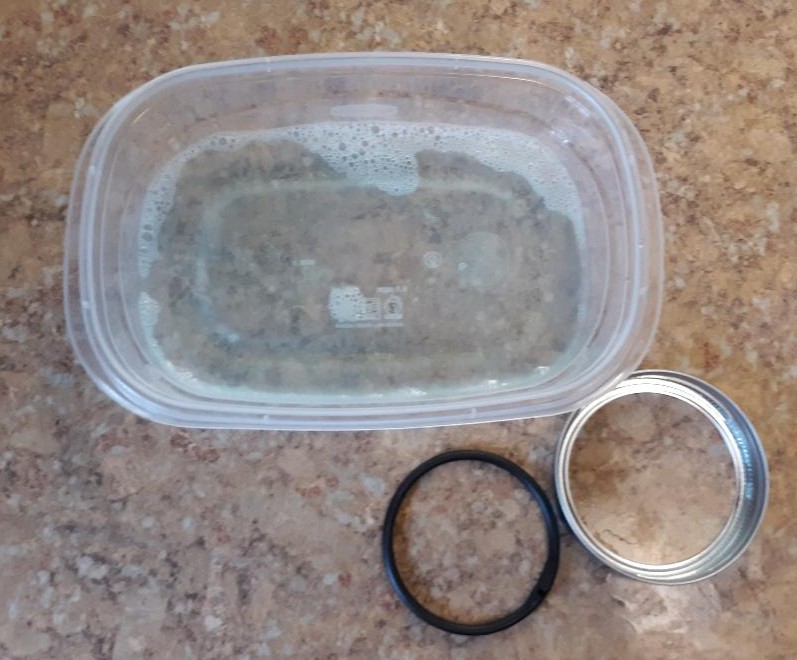
Blowing bubbles requires children to take deep breaths, which can have a calming effect. If you don't have bubble solution, you can make a homemade version by stirring 1/2 cup of a liquid soap such as dish detergent and three cups of water together. Pour a small amount into a bowl or shallow dish to dip the bubble wand in. You can make a bubble wand using basic household objects. I used a metal ring from a mason jar and a ring that holds my measuring spoons together. You could also use a kitchen strainer with large holes, or a bangle style bracelet. Really anything with large holes in it will work.


The world is chaotic right now, and everyone is feeling the stress. I hope you enjoy trying this activity and that it brings a little bit of relaxation to you and your children during this stressful time.